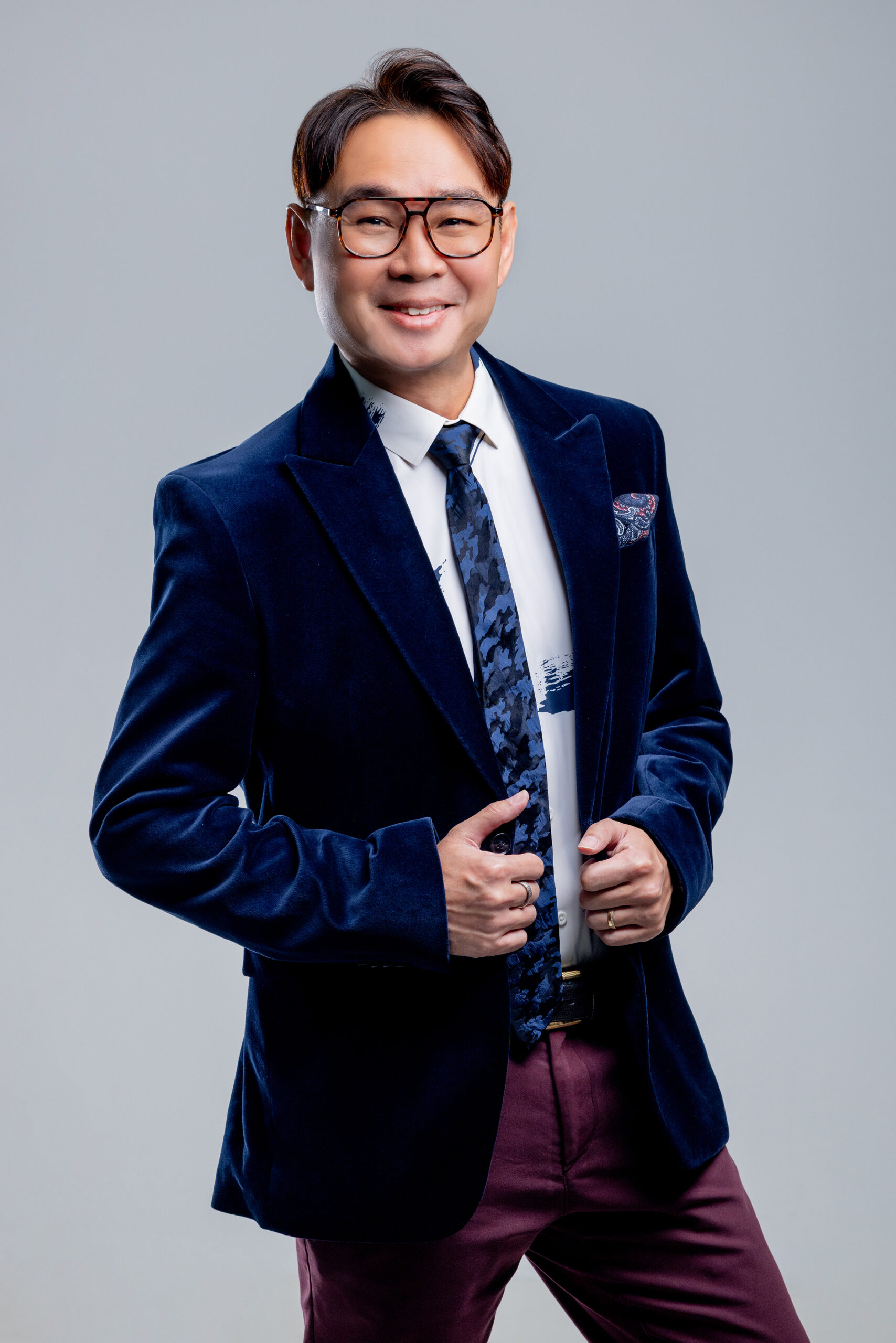
As an author and public speaker, I have always admired people who can write and speak well. And someone who has inspired me with his professional moderation and emcee skills is my friend, Barry Chou.
Along with his authoritative voice, he brings more than 20 years of transformation and training expertise to power events and conversations.
In this personal interview, Barry shares his expertise, insights, and perspectives on not just moderation and emceeing, but career coaching.
Q: First, let’s start at the beginning: what first drew you to guiding conversations and energising audiences?
It all started close to 25 years ago! I was listening to a motivational speaker named Jerry Clark on an audio tape on my AIWA Walkman. There was something in the speech, in the communication, in the heart of it, that spoke so deep and resounded right into my heart.
I remember listening to that tape over and over again, being brought to tears and utmost inspiration multiple times.
Fast forward a number of years, I was privileged to have the opportunity to serve audiences as a trainer, speaker, event host and moderator, eventually also to hundreds and also several thousand in-attendance, whether from Singapore or around the globe.
In fact, as I am sharing this, I’ve just hosted two back-to-back evenings of Christmas celebrations!
As an event host, I really enjoy seeing audiences settle down to the event, enjoy themselves and the experiences, letting their hair down. And when it’s a business or learning conference, I really enjoy seeing the eyes of people light up when they learn and discover new things. It is nice when members of the audience come up to say that they loved or recognised my voice even from afar, along with the stage presence. And it is definitely rewarding when a panel member — who may be a C-Suite or industry leader — or even professionals or other attendees in the audience come to you to say that the panel discussion was so well facilitated, with the thoughts so well-stitched together on stage.
Q: In your early days, what was one unexpected challenge you faced and how did you grow from it?
Some 24 years ago, I had an opportunity to host an event, graced by a then-Member of Parliament. It started well, I must say! It ended off at Suntec City, and for some reason, I froze on stage. I found myself lost in fear on stage, unsure of what to do, and feeling uncertain eyes around me. It was the first event I had hosted, and I really felt like a failure after that. I thought that maybe this was not something I should do.
Sometime later, someone invited me to host another event. They had appreciated my charisma, voice, and humour.
However, I was unsure. I mean, I felt that I had failed. Eventually, I asked myself, “Would I stay in my comfort zone? Would I choose to stay in what happened and where I was? Or would I choose to step out, face my fears, and do what I innately felt and knew could well be inside me?”
I am sure you guessed the choice that I took. After what was probably several days or a week, I said yes to that opportunity. It went well, and I never looked back.
The lesson I took from that experience is to grow in stepping outside of one’s comfort zone. The comfort zone is familiar and can look and feel safe. At the same time, it can be one’s prison, with walls that we think we cannot cross. But when you make that bold choice to step out of it, you can see, feel, and experience things so differently, and you will never be the same person again.
Q: Whether you’re hosting a panel or commanding a stage, how do you prepare yourself to show up with clarity and confidence every time?
There are three things that I do each time.
Preparation is key. Well, this may have been influenced by my background as a learning and development consultant, when consulting with businesses on transformation, or even doing theatre stage acting on the side. It is essential to find out all the key details about the event. That includes the client’s objectives (including their overall larger intent), the target audience, their pain-points and aspirations, what is in-trend, what matters to the organiser, the topics to be covered, the speakers or panellists who will be present, understanding any stakeholder dynamics, among others.
And yes, I would have definitely watched clips of speakers I am introducing or panellists I am moderating, even before I meet them in-person. All in all, such preparation will enable one to be on the same page as the client and event management company, so that we can bring the entire event or show to life and achieve its desired intent.
It is also important to visualise and envision how success would look like. Yes, we must consider what may go wrong — based on our experiences and planning — so that we can have contingencies. However, as the anchor person running the event or show on stage live, it is key to imagine, see, and feel how it can successful. For example, how would people feel and see across the journey of the event or show? This also helps the host or emcee to crystallise how the event or show can turn out, and how to navigate towards that end point.
Importantly, as Christian, I pray to and trust the Lord for wisdom so that I can best serve the client, partner with the event manager company, and be a blessing to the audience.
Q: What’s your approach to drawing out someone’s best self in the moment?
I see this as a question both as a panel moderator and a coach.
As a moderator, I see two areas.
Firstly, it is to know who the person is and what he or she brings to the table. This usually lies in their strength, experience, and competencies. By drawing these out, I can better position and enable the panel member to serve the audience.
Secondly, it is to be constantly aware of the ebbs and flows of a panel discussion. That means also being aware of how the panel members build on one another, where the audience is, and how it is flowing. One can also recognise what is needed to best serve the audience at that point in time, and draw it out from the relevant panel members.
As a coach, I would say that the most important thing to serve your client is to be present. It means being there with the client, giving him or her your fullest attention. It is a key practice required at International Coaching Federation (ICF) level for a reason. When a coach is present with the client, the coach is then able to really listen to the person — what is said and not said, what is really beneath the surface. This also enables the client to flow into a learning zone, where he or she can really learn from himself or herself, and also from the questions the coach will ask. In fact, when a coach is fully present with the client, the coach is able to ask the questions that matter to help the client.
Q: In your experience, what’s one piece of conventional wisdom about professional moderation and emceeing that you think people should rethink?
This is a good question, Shawn!
One misnomer that I see is that it is cheaper to get someone in-house or ‘arrowing’ someone to emcee or moderate an event. In fact, using an untrained host or moderator is more costly!
A professional emcee manages energy, clarity, and momentum, and definitely not just the clock. Sometimes the emcee holds time to land a message; sometimes he cuts it to protect audience attention.
What clients or guests come to an event, they can often hear the emcee even from afar or before the actual presentations begin. Such early impressions are key to capture the attention of clients and target audiences, to know whether they should work with the client or enrol in the products or services on display. This is part of the organisation’s branding and memories that you want created for your clients and audiences. Invest in that, and you build a stronger connection, trust, and higher probability of partnership and sales. And investing in and partnering with a seasoned, skilled, and trusted emcee or moderator plays a good part.
A professional moderator also protects the audience and programme flow, even with senior leaders on the panel, through timely and respectful interventions, summarising and reframing.
A professional emcee and moderator does not just read the script or the questions; instead, he or she carries the heart and essence of the message, weaving and stitching things together, in service to the organiser and audience. It is like an art form, and requires skill and finesse.
Q: You’ve made career pivots in your life, like this one. Drawing on your experience in coaching, what advice would you give to jobseekers?
And yes, I would have definitely watched clips of speakers I am introducing or panellists I am moderating, even before I meet them in-person. All in all, such preparation will enable one to be on the same page as the client and event management company, so that we can bring the entire event or show to life and achieve its desired intent.
It is also important to visualise and envision how success would look like. Yes, we must consider what may go wrong — based on our experiences and planning — so that we can have contingencies. However, as the anchor person running the event or show on stage live, it is key to imagine, see, and feel how it can be successful. For example, how would people feel and see across the journey of the event or show? This also helps the host or emcee to crystallise how the event or show can turn out, and how to navigate towards that end point.
Importantly, as Christian, I pray to and trust the Lord for wisdom so that I can best serve the client, partner with the event manager company, and be a blessing to the audience.
Q: What’s your approach to drawing out someone’s best self in the moment?
I see this as a question both as a panel moderator and a coach.
As a moderator, I see two areas.
Firstly, it is to know who the person is and what he or she brings to the table. This usually lies in their strength, experience, and competencies. By drawing these out, I can better position and enable the panel member to serve the audience.
Secondly, it is to be constantly aware of the ebbs and flows of a panel discussion. That means also being aware of how the panel members build on one another, where the audience is, and how it is flowing. One can also recognise what is needed to best serve the audience at that point in time, and draw it out from the relevant panel members.
As a coach, I would say that the most important thing to serve your client is to be present. It means being there with the client, giving him or her your fullest attention. It is a key practice required at International Coaching Federation (ICF) level for a reason. When a coach is present with the client, the coach is then able to really listen to the person — what is said and not said, what is really beneath the surface. This also enables the client to flow into a learning zone, where he or she can really learn from himself or herself, and also from the questions the coach will ask. In fact, when a coach is fully present with the client, the coach is able to ask the questions that matter to help the client.
Q: In your experience, what’s one piece of conventional wisdom about professional moderation and emceeing that you think people should rethink?
This is a good question, Shawn!
One misnomer that I see is that it is cheaper to get someone in-house or ‘arrowing’ someone to emcee or moderate an event. In fact, using an untrained host or moderator is more costly!
A professional emcee manages energy, clarity, and momentum, and definitely not just the clock. Sometimes the emcee holds time to land a message; sometimes he cuts it to protect audience attention.
What clients or guests come to an event, they can often hear the emcee even from afar or before the actual presentations begin. Such early impressions are key to capture the attention of clients and target audiences, to know whether they should work with the client or enrol in the products or services on display. This is part of the organisation’s branding and memories that you want created for your clients and audiences. Invest in that, and you build a stronger connection, trust, and higher probability of partnership and sales. And investing in and partnering with a seasoned, skilled, and trusted emcee or moderator plays a good part.
A professional moderator also protects the audience and programme flow, even with senior leaders on the panel, through timely and respectful interventions, summarising and reframing.
A professional emcee and moderator does not just read the script or the questions; instead, he or she carries the heart and essence of the message, weaving and stitching things together, in service to the organiser and audience. It is like an art form, and requires skill and finesse.
Q: You’ve made career pivots in your life, like this one. Drawing on your experience in coaching, what advice would you give to jobseekers?
Indeed, it was both nervy and exciting when I made the decision to pivot fully into coaching, hosting, and moderating, after being in corporate for two decades. And I was able to do that because of clarity of my Values, Interests, and Personality, along with Skills readiness — or VIPS in short.
When I started my career as a trainer, I had built up skills to speak, facilitate, and engage small to large audiences, across settings. I had also consulted with both clients and internal stakeholders on their needs and designed fit-for-purpose programmes and interventions. And when partnering with organisational leaders, staff members, or even leading teams, I had likewise coached people, applying various models over the years. So these are competencies that were built up, recognised, and transferable into domains that I am now in. And I enjoyed these streams of work which were in line with my values, interests, and personality to empower people — both others who knew me and myself could easily see and feel that ‘fit’.
Likewise, for jobseekers or those scanning for a fresh career pivot, explore work that syncs with your values, interests, and personality and that makes you feel more fulfilled.
In essence, ask: What really motivates you to pursue that work? What do you find most enjoyable and meaningful? Besides financial remuneration, what really drives you to do it?
Also, list down the strengths and competencies that you have built up thus far, and ask: What can be transferable into the new domain that you are looking at?
Sometimes, we may have biases and may not see our values, interests, personality, and skills as clearly as we need to. Some self-help with various tools and assessments, but may not get the full or accurate interpretation as a trained professional might; worse, some get confused!
That is where there is great value in having a coach come alongside us — as an independent and skilled thinking partner who is able to ask us the right questions at the right time — to help us gain greater self-awareness and clarity, and chart a practical roadmap for the path ahead.
Clarity is power, and a realistic and actionable roadmap is simply being practical.
And yes, I would have definitely watched clips of speakers I am introducing or panellists I am moderating, even before I meet them in-person. All in all, such preparation will enable one to be on the same page as the client and event management company, so that we can bring the entire event or show to life and achieve its desired intent.
It is also important to visualise and envision how success would look like. Yes, we must consider what may go wrong — based on our experiences and planning — so that we can have contingencies. However, as the anchor person running the event or show on stage live, it is key to imagine, see, and feel how it can be successful. For example, how would people feel and see across the journey of the event or show? This also helps the host or emcee to crystallise how the event or show can turn out, and how to navigate towards that end point.
Importantly, as Christian, I pray to and trust the Lord for wisdom so that I can best serve the client, partner with the event manager company, and be a blessing to the audience.
Q: What’s your approach to drawing out someone’s best self in the moment?
I see this as a question both as a panel moderator and a coach.
As a moderator, I see two areas:
- Firstly, it is to know who the person is and what he or she brings to the table. This usually lies in their strength, experience, and competencies. By drawing these out, I can better position and enable the panel member to serve the audience.
- Secondly, it is to be constantly aware of the ebbs and flows of a panel discussion. That means also being aware of how the panel members build on one another, where the audience is, and how it is flowing. One can also recognise what is needed to best serve the audience at that point in time, and draw it out from the relevant panel members.
As a coach, I would say that the most important thing to serve your client is to be present. It means being there with the client, giving him or her your fullest attention. It is a key practice required at International Coaching Federation (ICF) level for a reason. When a coach is present with the client, the coach is then able to really listen to the person — what is said and not said, what is really beneath the surface. This also enables the client to flow into a learning zone, where he or she can really learn from himself or herself, and also from the questions the coach will ask. In fact, when a coach is fully present with the client, the coach is able to ask the questions that matter to help the client.
Q: In your experience, what’s one piece of conventional wisdom about professional moderation and emceeing that you think people should rethink?
This is a good question, Shawn!
One misnomer that I see is that it is cheaper to get someone in-house or ‘arrowing’ someone to emcee or moderate an event. In fact, using an untrained host or moderator is more costly!
A professional emcee manages energy, clarity, and momentum, and definitely not just the clock. Sometimes the emcee holds time to land a message; sometimes he cuts it to protect audience attention.
When clients or guests come to an event, they can often hear the emcee even from afar or before the actual presentations begin. Such early impressions are key to capture the attention of clients and target audiences, to know whether they should work with the client or enrol in the products or services on display. This is part of the organisation’s branding and memories that you want created for your clients and audiences. Invest in that, and you build a stronger connection, trust, and higher probability of partnership and sales. And investing in and partnering with a seasoned, skilled, and trusted emcee or moderator plays a good part.
A professional moderator also protects the audience and programme flow, even with senior leaders on the panel, through timely and respectful interventions, summarising and reframing.
A professional emcee and moderator does not just read the script or the questions; instead, he or she carries the heart and essence of the message, weaving and stitching things together, in service to the organiser and audience. It is like an art form, and requires skill and finesse.
Q: You’ve made career pivots in your life, like this one. Drawing on your experience in coaching, what advice would you give to jobseekers?
Indeed, it was both nervy and exciting when I made the decision to pivot fully into coaching, hosting, and moderating, after being in corporate for two decades. And I was able to do that because of clarity of my Values, Interests, and Personality, along with Skills readiness — or VIPS in short.
When I started my career as a trainer, I had built up skills to speak, facilitate, and engage small to large audiences, across settings. I had also consulted with both clients and internal stakeholders on their needs and designed fit-for-purpose programmes and interventions. And when partnering with organisational leaders, staff members, or even leading teams, I had likewise coached people, applying various models over the years. So these are competencies that were built up, recognised, and transferable into domains that I am now in. And I enjoyed these streams of work which were in line with my values, interests, and personality to empower people — both others who knew me and myself could easily see and feel that ‘fit’.
Likewise, for jobseekers or those scanning for a fresh career pivot, explore work that syncs with your values, interests, and personality and that makes you feel more fulfilled.
In essence, ask:
- What really motivates you to pursue that work?
- What do you find most enjoyable and meaningful?
- Besides financial remuneration, what really drives you to do it?
Also, list down the strengths and competencies that you have built up thus far, and ask: What can be transferable into the new domain that you are looking at?
Sometimes, we may have biases and may not see our values, interests, personality, and skills as clearly as we need to. Some self-help with various tools and assessments, but may not get the full or accurate interpretation as a trained professional might; worse, some get confused!
That is where there is great value in having a coach come alongside us — as an independent and skilled thinking partner who is able to ask us the right questions at the right time — to help us gain greater self-awareness and clarity, and chart a practical roadmap for the path ahead.
Clarity is power, and a realistic and actionable roadmap is simply being practical.
Q: And finally, what are some important takeaways for aspiring emcees and moderators?
Like any trade, I think it is important to know and remember your ‘Why’. Like in any business or profession, there can be times where you think you have failed or actually fail. This may mean not performing your best, when things go bad even when you have tried your best, when you did not make the best business decisions, and so on. It can sound clichéd, but your reason for doing what you do will keep you going.
Secondly, constantly grow your ‘How’. This can include your bag of tools that help you make a difference to the clients and partners you work with and audiences you serve. Remember, what works for others may not work for you. You, yourself, your personality, your charisma, and your competencies honed over the years — those are your greatest tools.
About Barry
Barry Chou offers professional emcee and moderation services for corporate events, conferences, and industry forums in Singapore and beyond. Visit his website at https://barrychou.com/.
Originally written by Shawn Seah in Medium titled Reflections on Voice, Presence, and Guiding Conversations